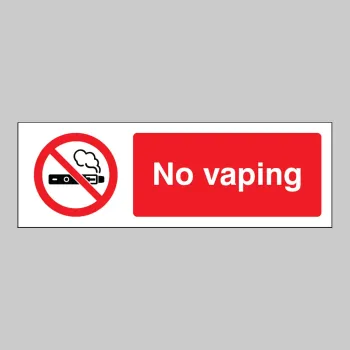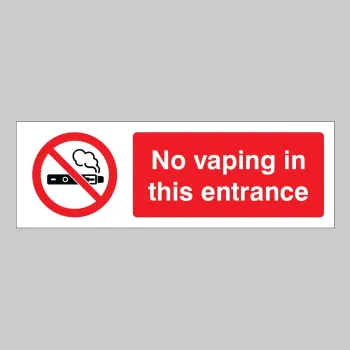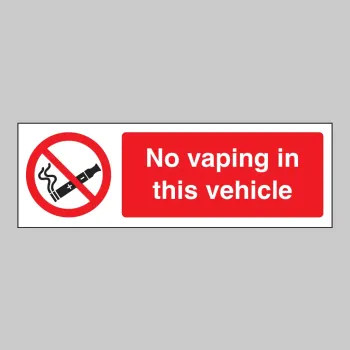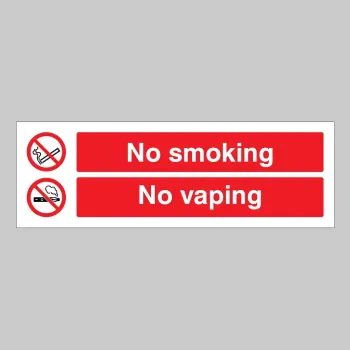

We've Launched a Range of "No Vaping" Signs to Help Combat the Clouds
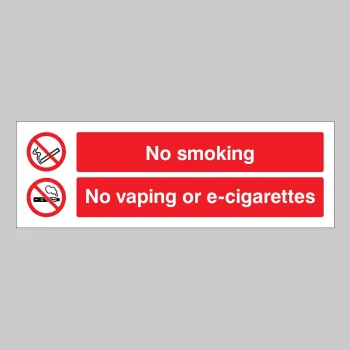
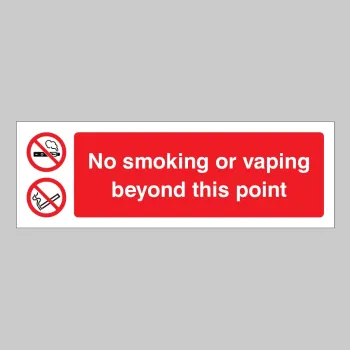
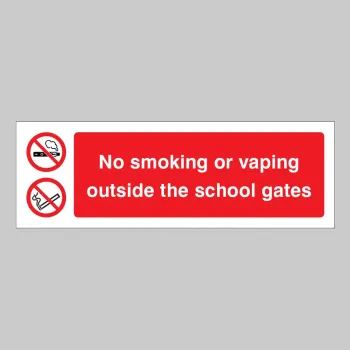
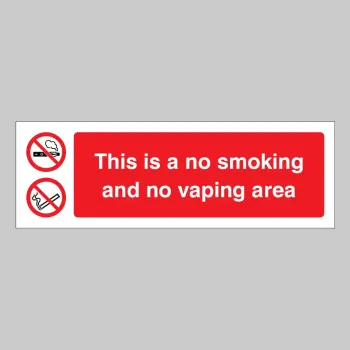
Creating a safe, healthy, and professional environment is a priority for every organisation. As vaping becomes increasingly common alongside traditional smoking, businesses and public institutions are recognising the importance of clear signage that addresses both activities. Safety signs such as “No Vaping”, “This is a No Smoking, No Vaping Area”, and “No Vaping Outside the School Gates” play a vital role in maintaining clean air, supporting health and safety policies, and ensuring compliance across shared spaces.
One of the main reasons organisations should use no smoking and no vaping signs is to protect public health and improve indoor and outdoor air quality. While vaping is often viewed differently from traditional smoking, vaping aerosols can still contain chemicals and fine particles that may affect those nearby. These notices clearly define an entire space as smoke-free and vape-free. This removes uncertainty, reinforces behavioural expectations, and helps everyone understand the rules before entering or using the area.
Unlike traditional smoking, vaping has not developed the same level of social stigma or public disapproval. Over the past several decades, smoking has become widely restricted and socially discouraged through health campaigns, legislation, and visible safety signage. As a result, most people now recognise smoking in shared public spaces as unacceptable behaviour. Vaping, however, is often still viewed as more socially acceptable, particularly among younger age groups, because it is newer, less regulated in some settings, and frequently marketed as a cleaner alternative to smoking.
This reduced stigma can contribute to the growing number of people who vape openly in workplaces, public spaces, transport hubs, and around schools. To help reverse this trend, society needs clearer boundaries and stronger public messaging around where vaping is and is not appropriate. Safety signs such as “No Vaping” and “This is a No Smoking, No Vaping Area” play an important role in shaping these expectations. Visible signage reinforces the idea that vaping should be treated with the same consideration and restrictions as smoking, particularly in shared environments where air quality, health, and public comfort matter.
Over time, consistent use of no vaping signage can help influence social behaviour in the same way no smoking signs helped change public attitudes toward cigarettes. When people repeatedly see vaping restrictions in offices, schools, shopping centres, and public venues, it helps normalise vape-free environments and encourages greater awareness of the impact vaping can have on others. In this way, signage becomes more than just a rule enforcement tool, it also helps shape healthier social norms and supports long-term public health goals.
No vaping signs should be positioned at every entrance to a building, reminders at reception desks, within corridors, toilets, waiting areas, and other shared spaces where people gather. Strategic placement ensures that these signs play a significant role in changing public perception by constantly reinforcing what society considers acceptable or unacceptable behaviour. When people repeatedly see signs such as “No Smoking” or “No Vaping” in workplaces, schools, transport systems, restaurants, and public buildings, the message becomes normalised. Over time, this creates a strong social expectation that certain behaviours should not take place in shared environments.
Signs are effective because they provide visible, everyday reminders of social rules and community standards. Even without direct enforcement, people tend to adjust their behaviour based on what appears socially accepted around them. For example, smoking gradually became less socially acceptable partly because no smoking signs became common across nearly all public spaces. The constant visibility of these signs reinforced the idea that smoking was harmful, inconsiderate in shared areas, and no longer viewed as normal public behaviour.
The same principle applies to vaping. In many places, vaping is still seen as more socially acceptable because restrictions are less visible and less consistently enforced. Introducing clear “No Vaping” signage helps communicate that vaping is also a behaviour that should be limited in shared public environments. As these signs become more widespread, they help shape public attitudes by signalling that clean air and consideration for others are priorities.
Over time, repeated exposure to safety signs can gradually shift cultural norms. Behaviours that were once common can become less acceptable simply because society becomes used to seeing them restricted. In this way, signage is not only a practical enforcement tool, but also a subtle form of public education that helps shape healthier and more considerate social habits.